
Search
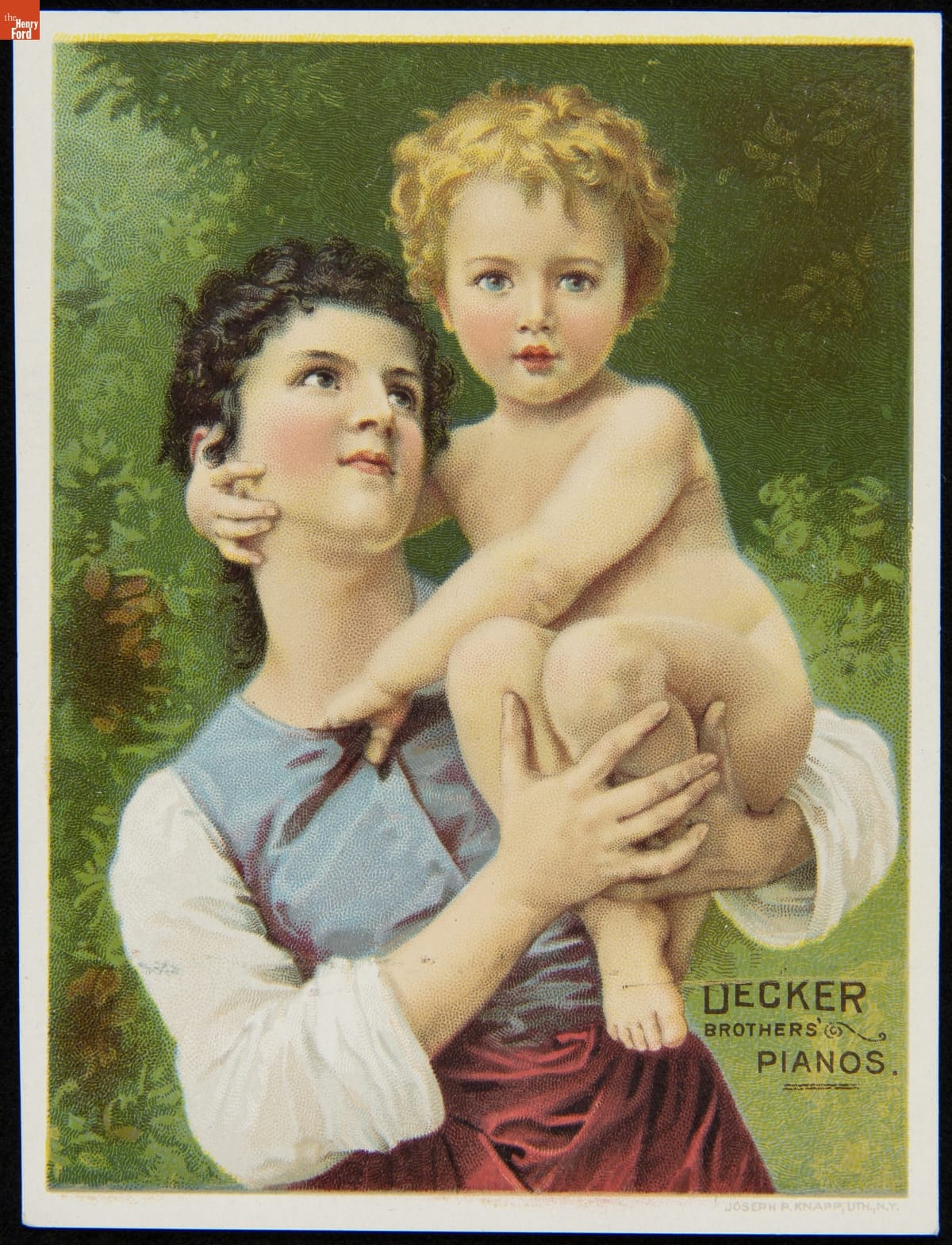
- Trade Card for Decker Brothers Pianos, 1862-1900 - In the last third of the nineteenth century, an unprecedented variety of consumer goods and services flooded the American market. Advertisers, armed with new methods of color printing, bombarded potential customers with trade cards. Americans enjoyed and often saved the vibrant little advertisements found in product packages or distributed by local merchants. Many survive as historical records of commercialism in the United States.
- 1862-1900
- Collections - Artifact
Trade Card for Decker Brothers Pianos, 1862-1900
In the last third of the nineteenth century, an unprecedented variety of consumer goods and services flooded the American market. Advertisers, armed with new methods of color printing, bombarded potential customers with trade cards. Americans enjoyed and often saved the vibrant little advertisements found in product packages or distributed by local merchants. Many survive as historical records of commercialism in the United States.
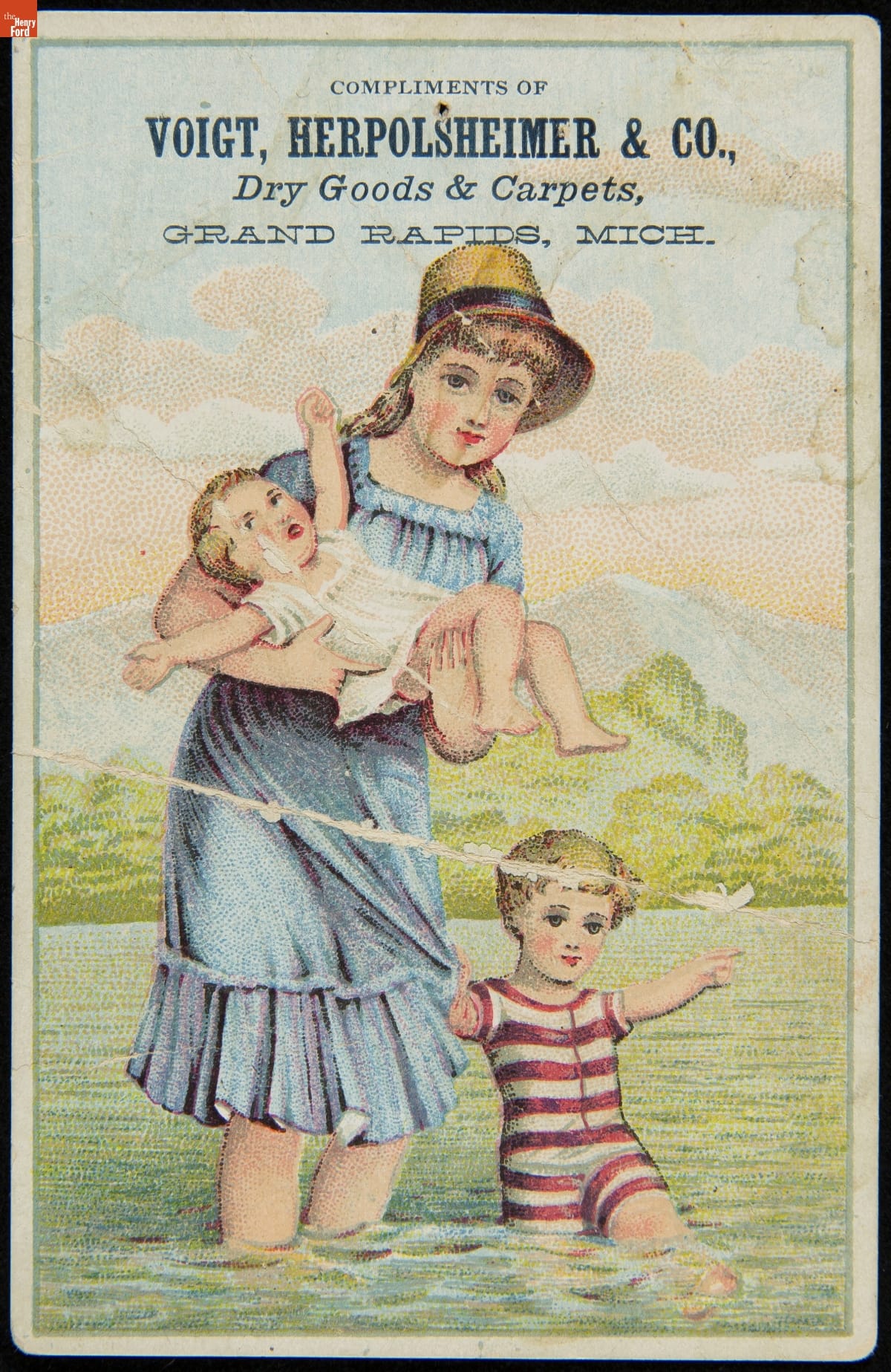
- Trade Card for Voigt, Herpolsheimer & Co.'s Dry Goods, and Carpets, 1880-1900 - In the last third of the nineteenth century, an unprecedented variety of consumer goods and services flooded the American market. Advertisers, armed with new methods of color printing, bombarded potential customers with trade cards. Americans enjoyed and often saved the vibrant little advertisements found in product packages or distributed by local merchants. Many survive as historical records of commercialism in the United States.
- 1880-1900
- Collections - Artifact
Trade Card for Voigt, Herpolsheimer & Co.'s Dry Goods, and Carpets, 1880-1900
In the last third of the nineteenth century, an unprecedented variety of consumer goods and services flooded the American market. Advertisers, armed with new methods of color printing, bombarded potential customers with trade cards. Americans enjoyed and often saved the vibrant little advertisements found in product packages or distributed by local merchants. Many survive as historical records of commercialism in the United States.
- Untitled from Relationship Series by Richard Royal, 1997 - Like many studio glass artists, Richard Royal conceives of his work in series. He views his series in autobiographical terms. This work is part of his "Relationship" series which he started following his marriage in 1989. This work represents the flowering of the series as it shows the abstracted arms of a mother and father holding a child at the center.

- 1997
- Collections - Artifact
Untitled from Relationship Series by Richard Royal, 1997
Like many studio glass artists, Richard Royal conceives of his work in series. He views his series in autobiographical terms. This work is part of his "Relationship" series which he started following his marriage in 1989. This work represents the flowering of the series as it shows the abstracted arms of a mother and father holding a child at the center.
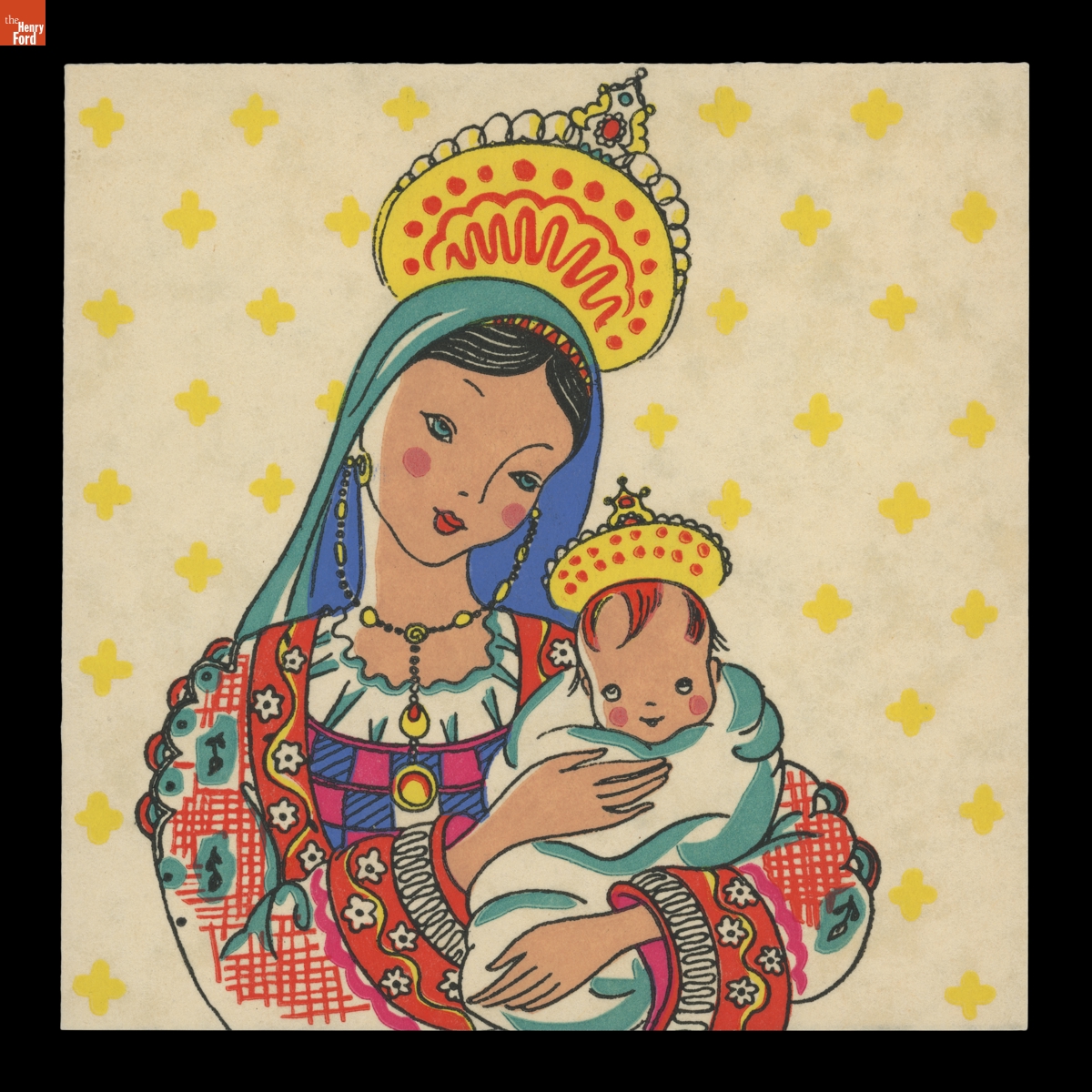
- Christmas Card featuring Madonna and Child, 1941 - Christians often send Christmas cards that incorporate religious themes to celebrate the birth of Jesus. Imagery may allude to biblical stories of the Nativity, the Madonna and Child, the three kings or wise men, or the adoration of the shepherds. Texts may quote scriptures or verses from Christmas hymns or carols; other passages may be generic, wishing peace and goodwill to the recipient.
- 1941
- Collections - Artifact
Christmas Card featuring Madonna and Child, 1941
Christians often send Christmas cards that incorporate religious themes to celebrate the birth of Jesus. Imagery may allude to biblical stories of the Nativity, the Madonna and Child, the three kings or wise men, or the adoration of the shepherds. Texts may quote scriptures or verses from Christmas hymns or carols; other passages may be generic, wishing peace and goodwill to the recipient.
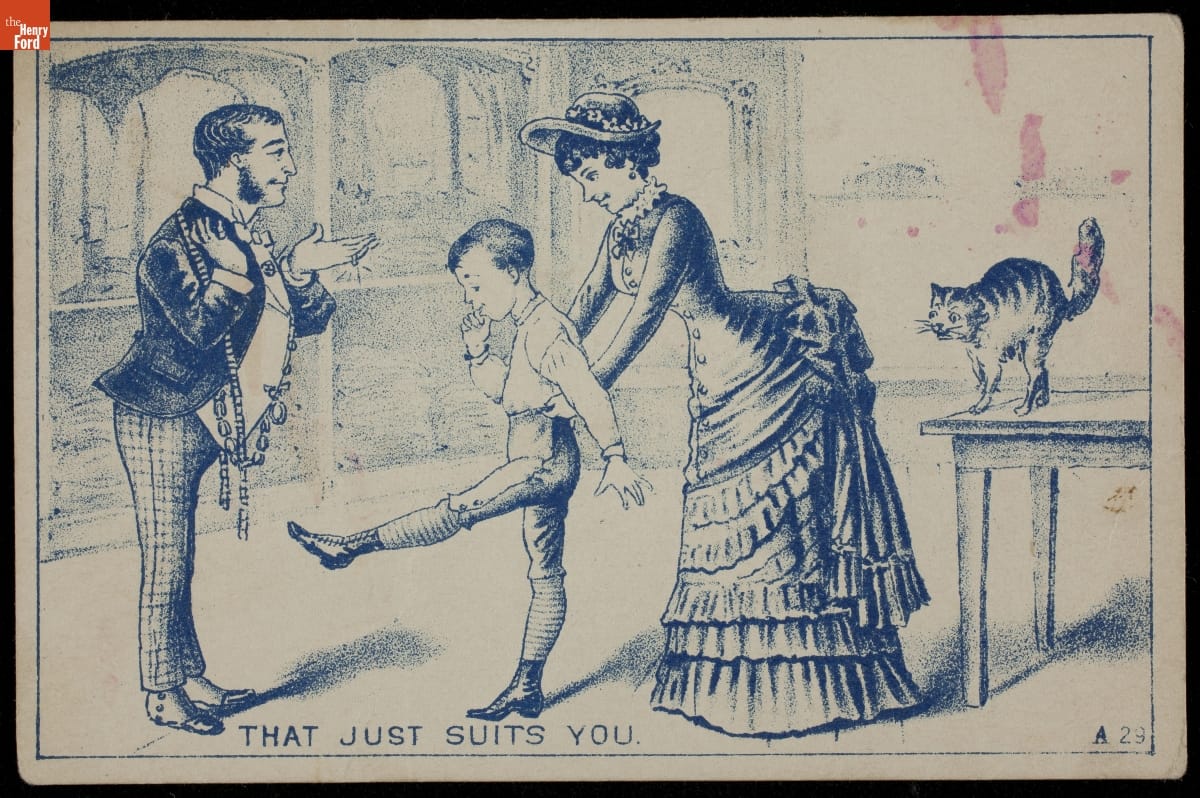
- Trade Card for Clothing, Tower Clothing Co., circa 1885 - In the last third of the nineteenth century, an unprecedented variety of consumer goods and services flooded the American market. Advertisers bombarded potential customers with trade cards. Americans enjoyed and saved the often illustrated little advertisements found in product packages or distributed by local merchants. Many survive as historical records of commercialism in the United States.
- circa 1885
- Collections - Artifact
Trade Card for Clothing, Tower Clothing Co., circa 1885
In the last third of the nineteenth century, an unprecedented variety of consumer goods and services flooded the American market. Advertisers bombarded potential customers with trade cards. Americans enjoyed and saved the often illustrated little advertisements found in product packages or distributed by local merchants. Many survive as historical records of commercialism in the United States.