
Search
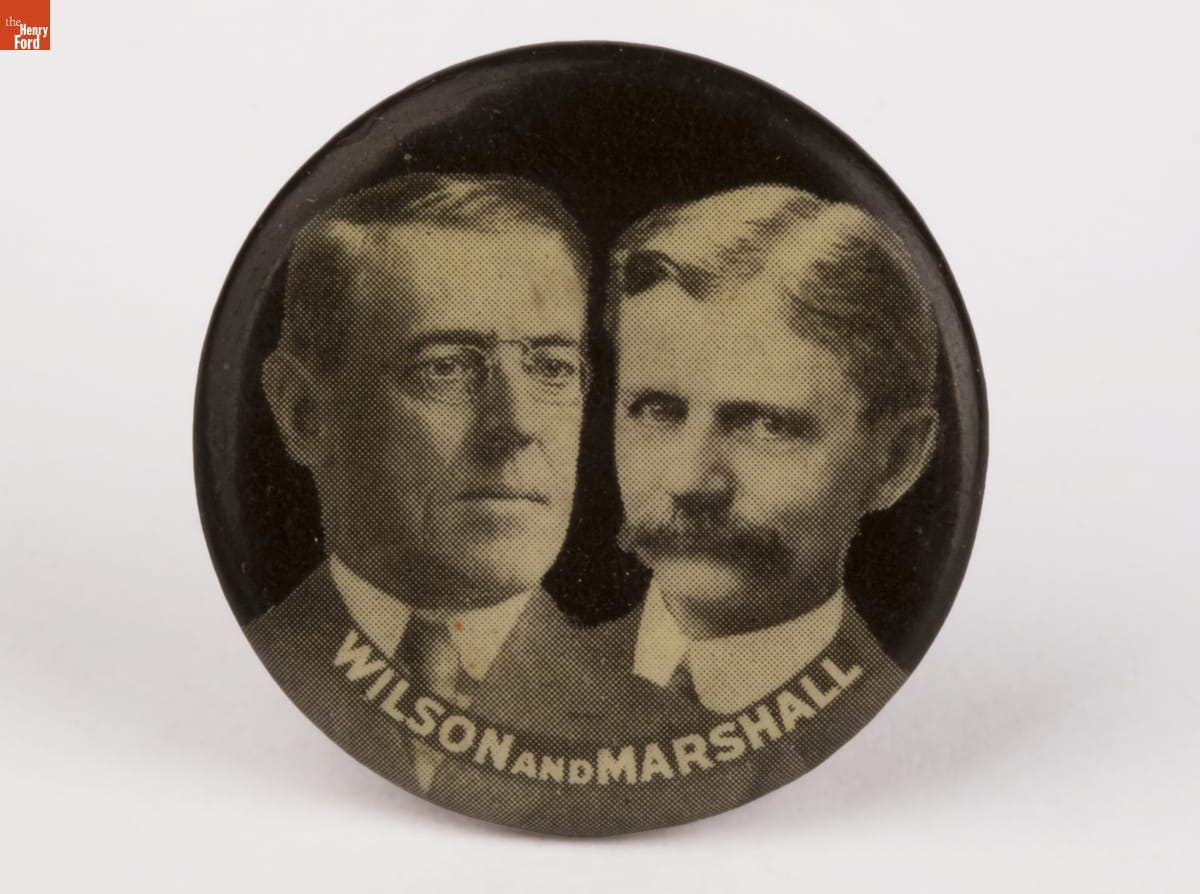
- Wilson-Marshall Campaign Button, 1912-1916 - Democrat Woodrow Wilson was elected president in 1912 and 1916. Party officials chose Indiana governor Thomas Marshall as his running mate each time. The pair did not work well together. The intellectual, activist Wilson rarely consulted with his unassuming yet genial vice president. Marshall remained distant from the White House throughout Wilson's term in office, even after the president suffered a debilitating stroke.
- 1912-1916
- Collections - Artifact
Wilson-Marshall Campaign Button, 1912-1916
Democrat Woodrow Wilson was elected president in 1912 and 1916. Party officials chose Indiana governor Thomas Marshall as his running mate each time. The pair did not work well together. The intellectual, activist Wilson rarely consulted with his unassuming yet genial vice president. Marshall remained distant from the White House throughout Wilson's term in office, even after the president suffered a debilitating stroke.
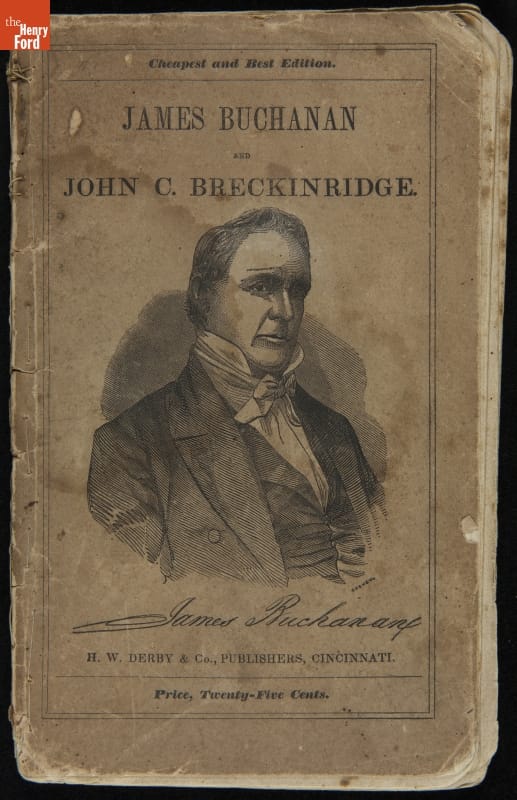
- "Lives of James Buchanan and John C. Breckinridge, Democratic Candidates for the Presidency and Vice-Presidency of the United States," 1856 - Democrats chose James Buchanan to head their presidential ticket in 1856. The long-serving politician seemed perfect to calm the sectional strife that gripped the nation. Buchanan hailed from non-slaveholding Pennsylvania but supported the rights of states and territories to decide whether slavery should exist within their own borders. He was elected, but divisions worsened. By the end of his presidency the country was splitting in two.
- 1856
- Collections - Artifact
"Lives of James Buchanan and John C. Breckinridge, Democratic Candidates for the Presidency and Vice-Presidency of the United States," 1856
Democrats chose James Buchanan to head their presidential ticket in 1856. The long-serving politician seemed perfect to calm the sectional strife that gripped the nation. Buchanan hailed from non-slaveholding Pennsylvania but supported the rights of states and territories to decide whether slavery should exist within their own borders. He was elected, but divisions worsened. By the end of his presidency the country was splitting in two.
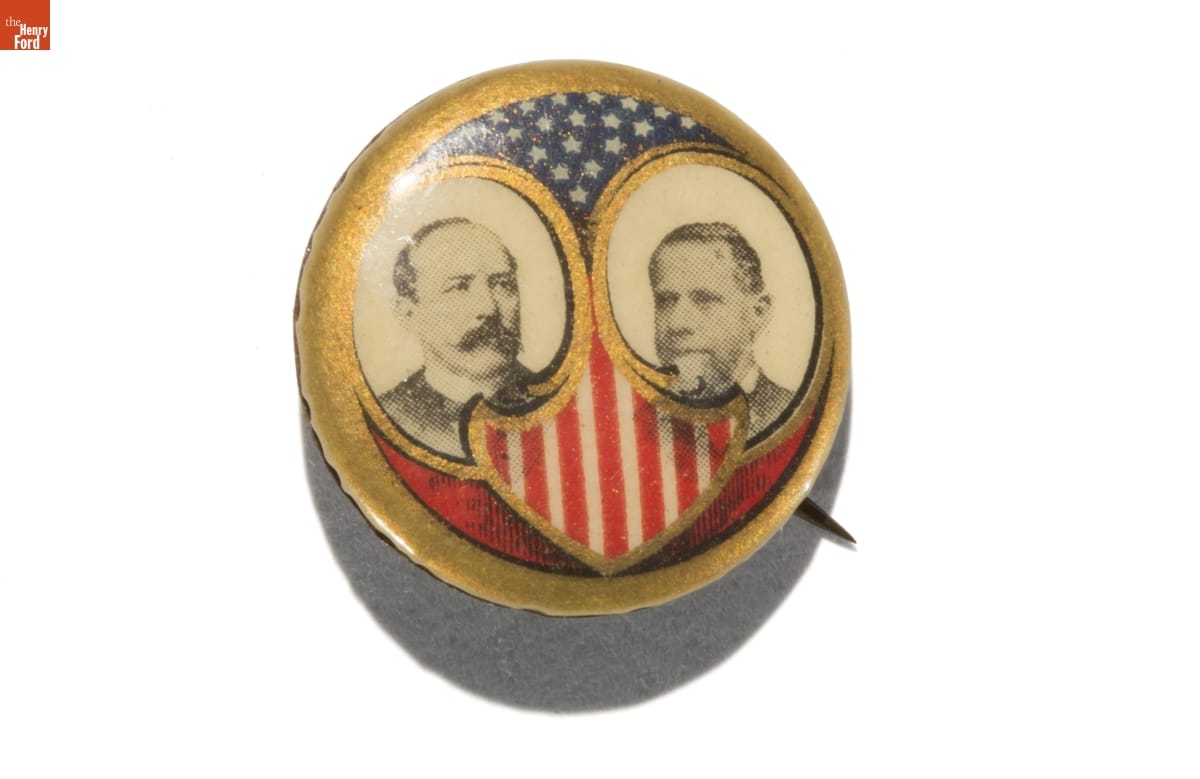
- Parker-Davis Campaign Button, 1904 - The Democrats nominated New Yorker Alton B. Parker for president in 1904. Parker never distinguished his political views from those of his Republican opponent during the campaign. This did not bode well for the virtually unknown Democratic candidate. Parker and his running mate, Henry Davis, lost to Theodore Roosevelt, the popular and energetic incumbent.
- 1904
- Collections - Artifact
Parker-Davis Campaign Button, 1904
The Democrats nominated New Yorker Alton B. Parker for president in 1904. Parker never distinguished his political views from those of his Republican opponent during the campaign. This did not bode well for the virtually unknown Democratic candidate. Parker and his running mate, Henry Davis, lost to Theodore Roosevelt, the popular and energetic incumbent.
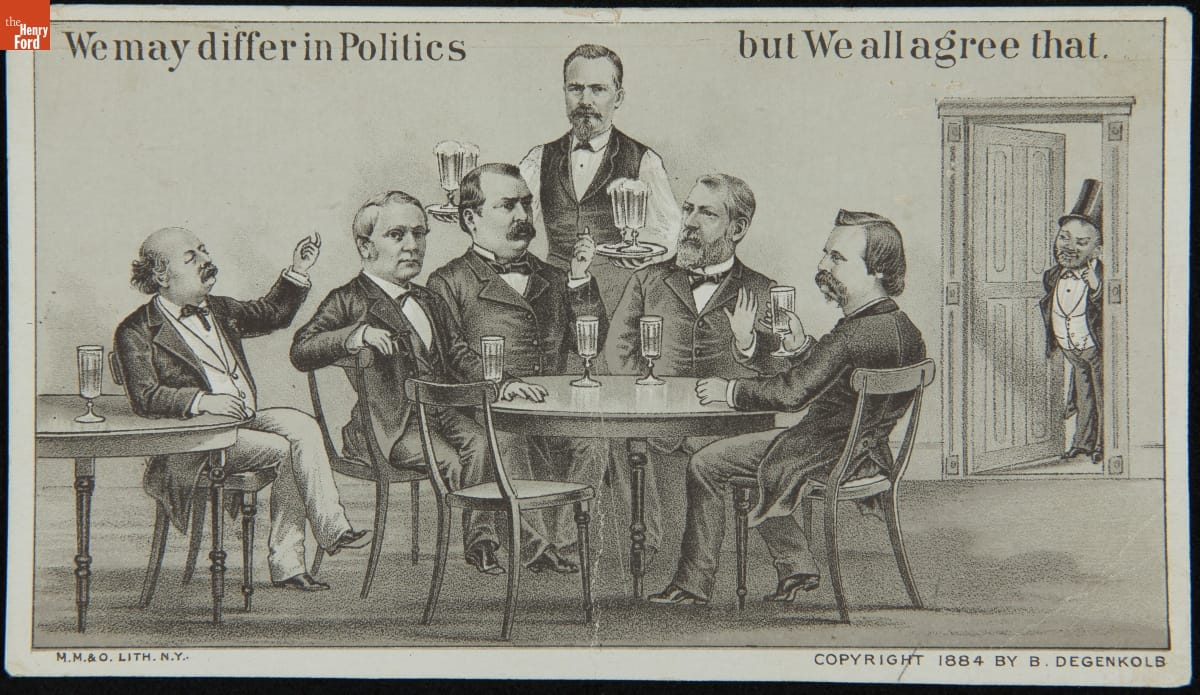
- Political Campaign Card, "We May Differ in Politics but We All Agree That...," 1884 -
- 1884
- Collections - Artifact
Political Campaign Card, "We May Differ in Politics but We All Agree That...," 1884
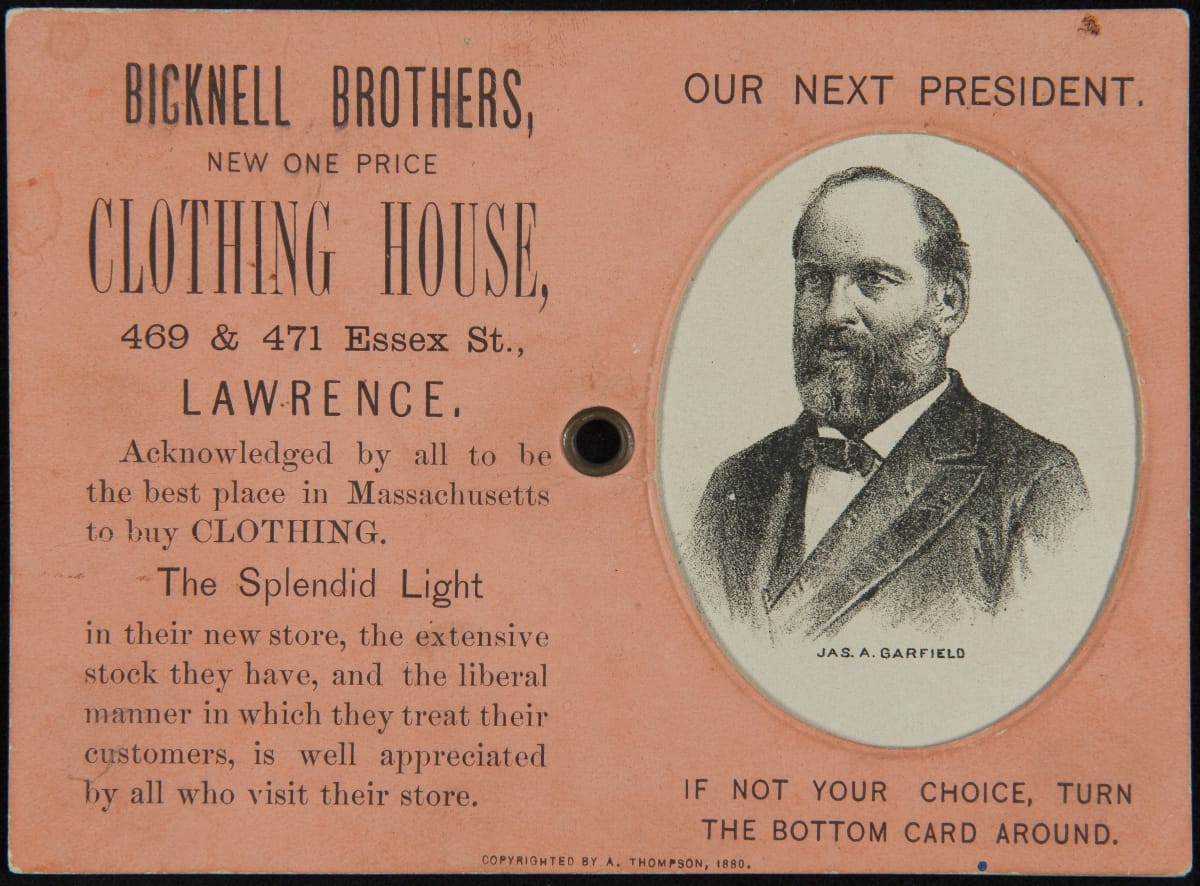
- Trade Card for Bicknell Brothers Clothing House, "Our Next President," 1880 - The 1880 U.S. Presidential election pitted Republican James Garfield against Democrat Winfield Scott Hancock. More than nine million Americans--a high turnout among eligible voters--cast ballots in the November election. In the end, fewer than 8,000 votes separated the two candidates. And while both Garfield and Hancock each captured 19 states, the electoral count--like the popular vote--favored Garfield.
- 1880
- Collections - Artifact
Trade Card for Bicknell Brothers Clothing House, "Our Next President," 1880
The 1880 U.S. Presidential election pitted Republican James Garfield against Democrat Winfield Scott Hancock. More than nine million Americans--a high turnout among eligible voters--cast ballots in the November election. In the end, fewer than 8,000 votes separated the two candidates. And while both Garfield and Hancock each captured 19 states, the electoral count--like the popular vote--favored Garfield.
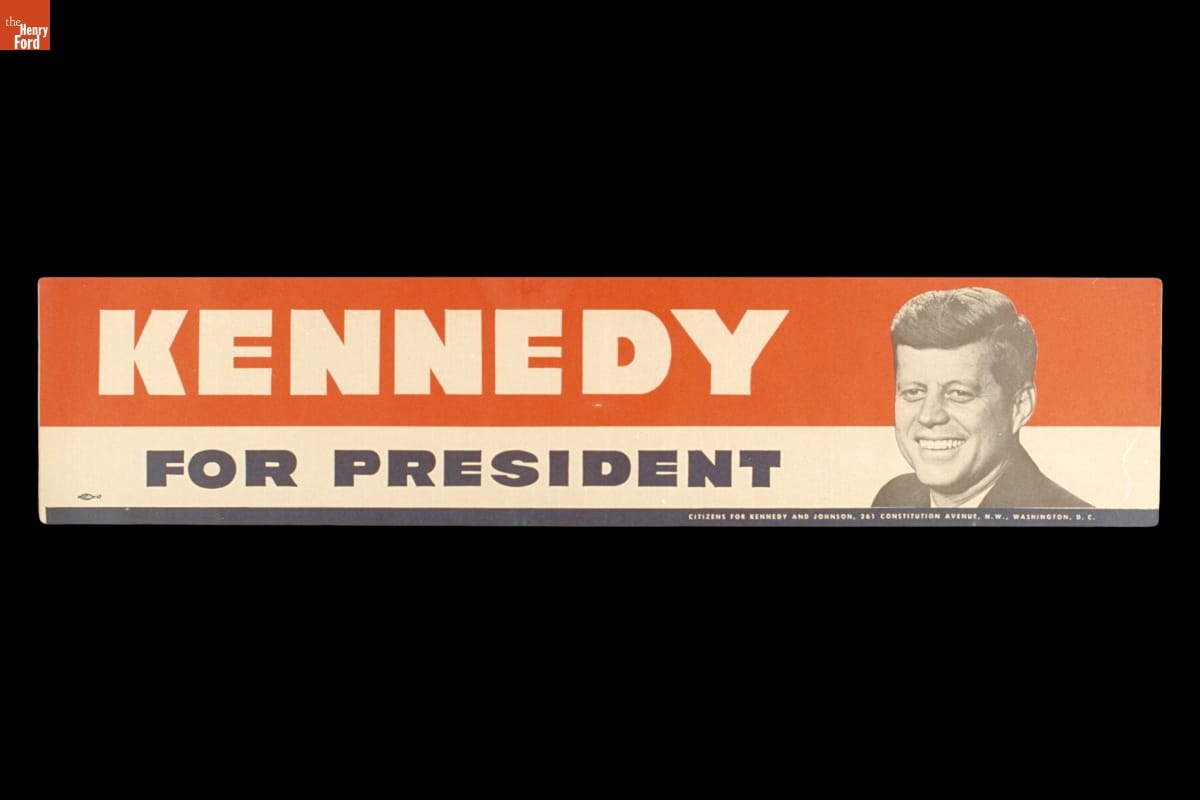
- Political Campaign Bumper Sticker, "Kennedy for President" 1960 - With campaign giveaways like this bumper sticker, Democratic presidential candidate John F. Kennedy launched an exhaustive campaign in 1960 against Republican opponent Vice President Richard M. Nixon. Despite charges that he lacked experience in foreign affairs and that his Catholic background would hurt him, Kennedy's knowledge and maturity eventually won him the very close 1960 election.
- 1960
- Collections - Artifact
Political Campaign Bumper Sticker, "Kennedy for President" 1960
With campaign giveaways like this bumper sticker, Democratic presidential candidate John F. Kennedy launched an exhaustive campaign in 1960 against Republican opponent Vice President Richard M. Nixon. Despite charges that he lacked experience in foreign affairs and that his Catholic background would hurt him, Kennedy's knowledge and maturity eventually won him the very close 1960 election.
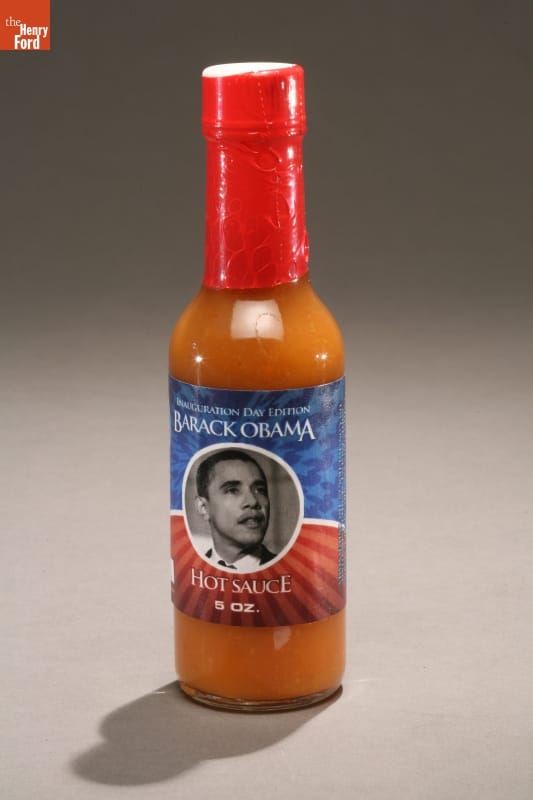
- Barack Obama Inauguration Day Edition Hot Sauce Bottle, 2009 - On January 20th, 2009, more than one million Americans came to Washington, D.C., to witness the inauguration of Barack Obama, America's first African American president. Souvenir vendors sold a wide range of materials to commemorate this historic event. Along with more traditional mementos -- buttons, ribbons and mugs -- vendors offered some non-traditional items like this bottle of hot sauce.
- 2009
- Collections - Artifact
Barack Obama Inauguration Day Edition Hot Sauce Bottle, 2009
On January 20th, 2009, more than one million Americans came to Washington, D.C., to witness the inauguration of Barack Obama, America's first African American president. Souvenir vendors sold a wide range of materials to commemorate this historic event. Along with more traditional mementos -- buttons, ribbons and mugs -- vendors offered some non-traditional items like this bottle of hot sauce.
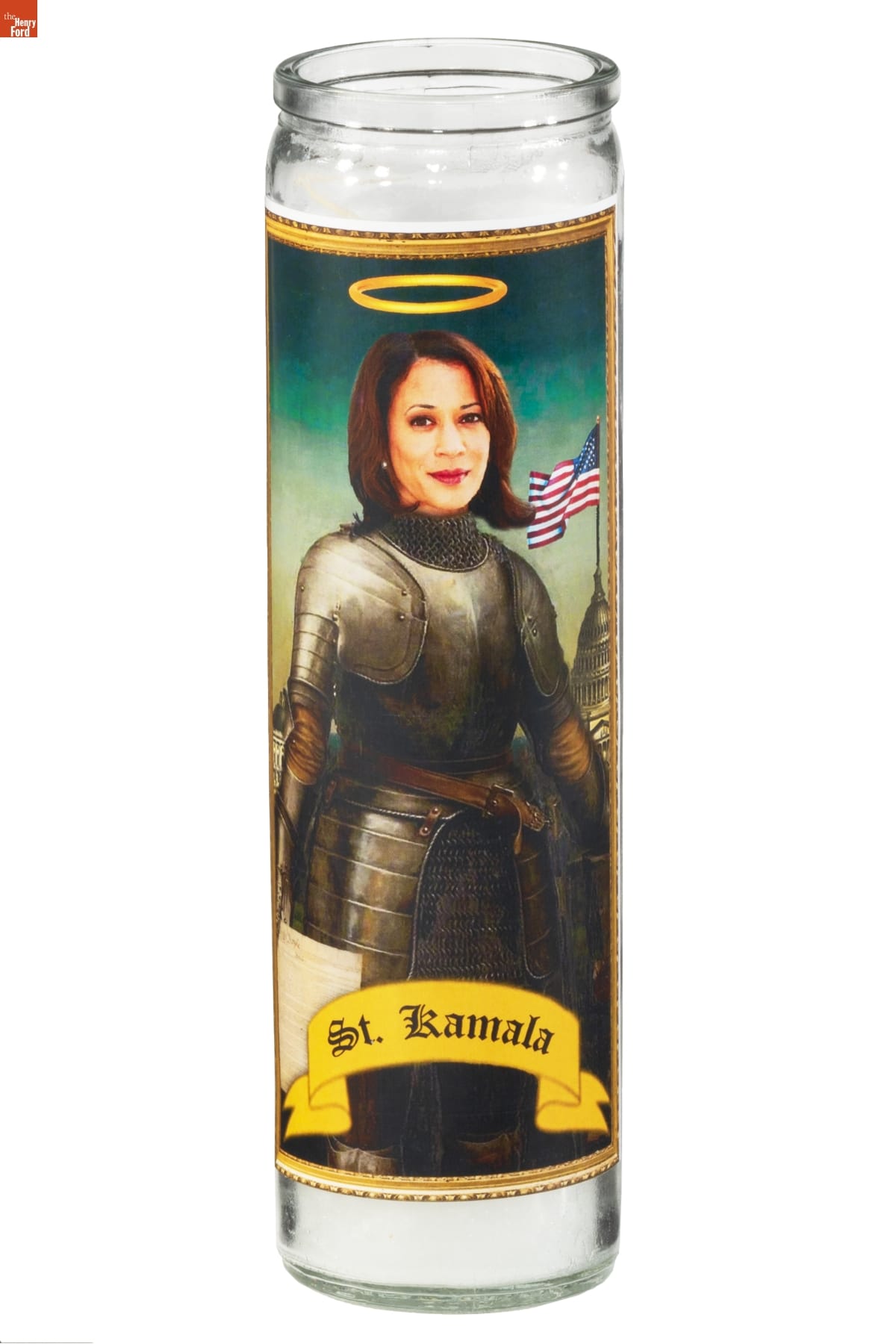
- "St. Kamala" Prayer Candle, 2020 - "Seven-day" devotional candles are traditionally used by practitioners of Catholicism, syncretic religions, and folk magic. They are used to petition saints and spirits for guidance, favors, to set intentions for luck, love--even revenge. They are found in religious supply stores like botanicas, grocery stores, and online. Recently, houseware boutiques appropriated prayer candles, ironically celebrating musicians, celebrities, and politicians.
- 2020
- Collections - Artifact
"St. Kamala" Prayer Candle, 2020
"Seven-day" devotional candles are traditionally used by practitioners of Catholicism, syncretic religions, and folk magic. They are used to petition saints and spirits for guidance, favors, to set intentions for luck, love--even revenge. They are found in religious supply stores like botanicas, grocery stores, and online. Recently, houseware boutiques appropriated prayer candles, ironically celebrating musicians, celebrities, and politicians.
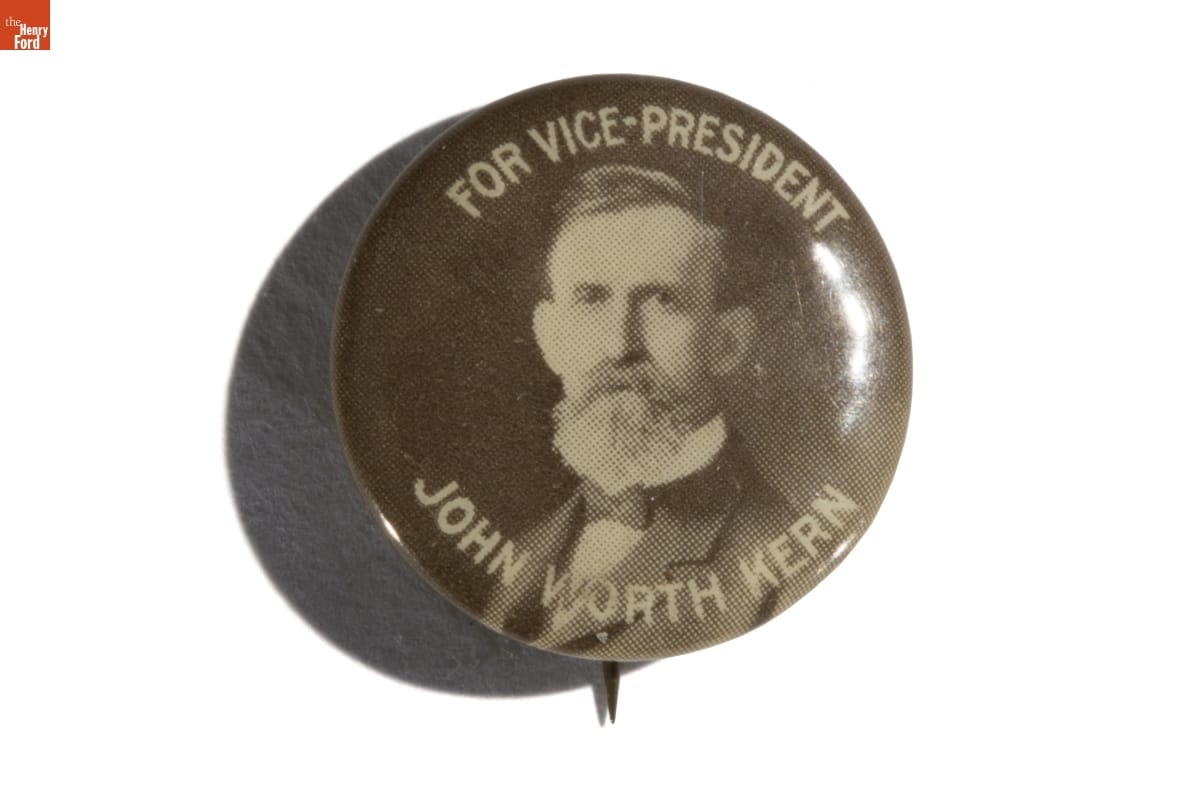
- John W. Kern Campaign Button, 1908 - William Jennings Bryan made his third and last attempt to become president in 1908. Bryan and his running mate, Indiana Senator John Kern, tried to distinguish themselves from their Republican opponents by championing a variety of domestic reforms. It didn't work. Voters chose the safe, well-qualified William Howard Taft -- President Roosevelt's hand-picked successor.
- 1908
- Collections - Artifact
John W. Kern Campaign Button, 1908
William Jennings Bryan made his third and last attempt to become president in 1908. Bryan and his running mate, Indiana Senator John Kern, tried to distinguish themselves from their Republican opponents by championing a variety of domestic reforms. It didn't work. Voters chose the safe, well-qualified William Howard Taft -- President Roosevelt's hand-picked successor.
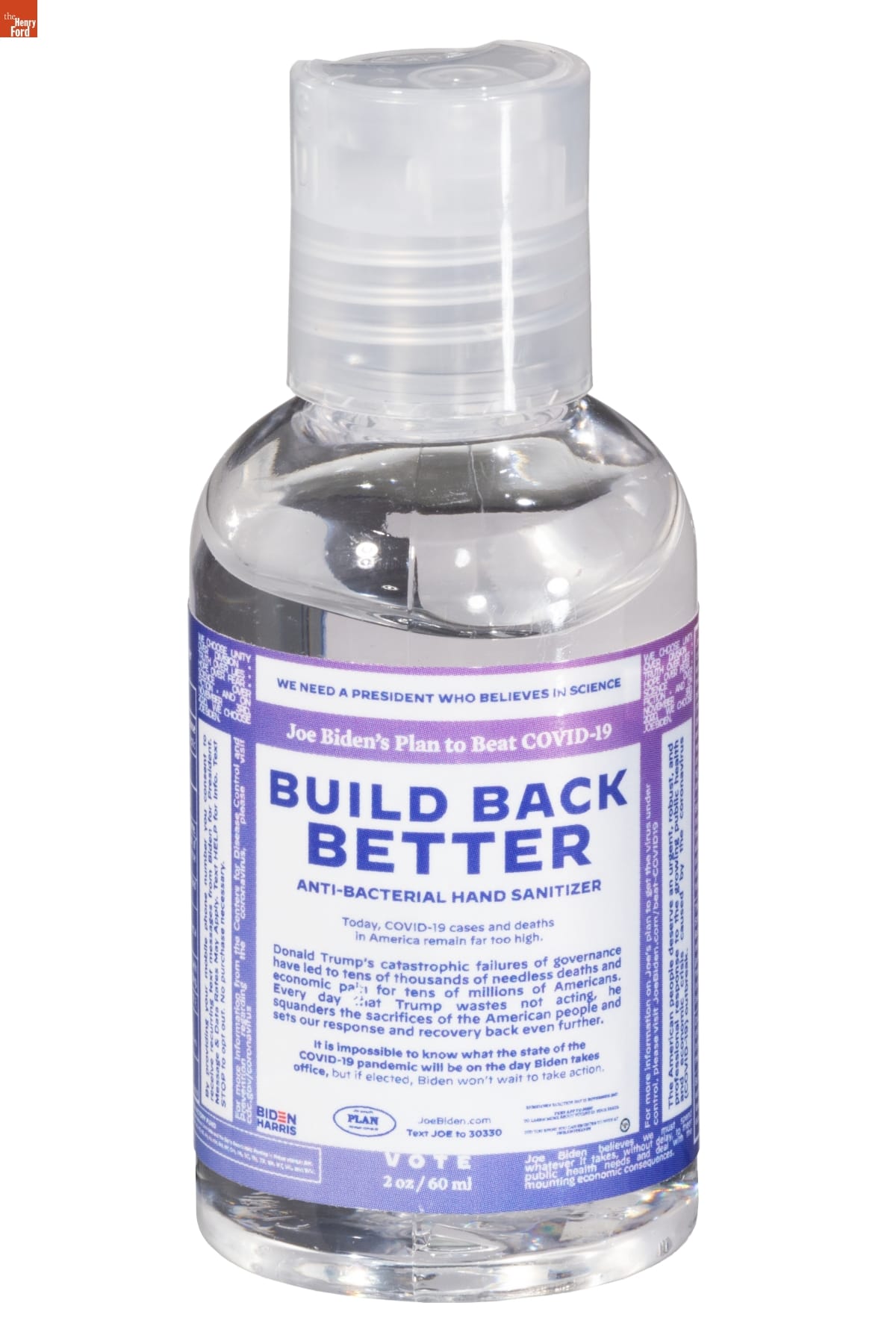
- "Build Back Better" Biden Campaign Bottle of Hand Sanitizer, 2020 - This bottle of hand sanitizer, sold via the official Biden campaign site, features a detailed outline of Biden's plan to combat COVID-19, as well as the "Build Back Better" slogan adopted by the campaign. Throughout the run-up to the election, Biden positioned himself as the candidate who most believed in science, and with a prepared plan to guide the country out of the pandemic.
- 2020
- Collections - Artifact
"Build Back Better" Biden Campaign Bottle of Hand Sanitizer, 2020
This bottle of hand sanitizer, sold via the official Biden campaign site, features a detailed outline of Biden's plan to combat COVID-19, as well as the "Build Back Better" slogan adopted by the campaign. Throughout the run-up to the election, Biden positioned himself as the candidate who most believed in science, and with a prepared plan to guide the country out of the pandemic.